
Gerd Kempermann - Genomics of Regeneration in the Central Nervous System
Previous and Current Research
Why is activity good for the brain?
How do changes on a cellular level contribute to adaptation processes that allow the brain (and with it its owner) to age successfully?
How can we train our brains to better withstand disease and age-related impairment? What can we do, if impairment and disease are already there?
Against common wisdom even the adult and aging brain can generate new neurons from a population of resident stem cells but it does so only in two privileged regions and on a minute scale. This process, adult neurogenesis, however, is tightly linked to brain function in the hippocampus, a brain area centrally involved in learning and memory processes. This connection makes it likely that adult neurogenesis serves a fundamental function for higher cognitive functions. In addition, both physical and cognitive activity regulate adult neurogenesis. Thereby, training and activity very directly act upon stem cells in the brain and induce them to produce neurons that serve a function in learning and memory.
The Genomics of Regeneration group at the CRTD is interested in adult neurogenesis and covers three research areas:
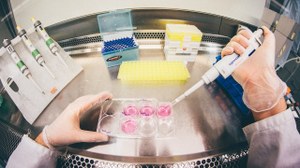
- We precisely examine the activity-dependent control of adult neurogenesis and of other precursor cell populations in the brain and try to understand how the stem cells receive and translate the signal that new neurons are needed. To reach this aim we study adult neurogenesis in the mouse brain and use environmental enrichment (as a cognitive stimulus) and voluntary physical activity as stimuli to increase adult neurogenesis. We also mimic these conditions on isolated precursor cells in cell culture experiments.
- We investigate how the activity-dependent regulation of adult neurogenesis functions on a molecular level. Here we are less interested in the contribution of individual genes (as important as these obviously are) but in the behavior of large genetic networks — hence the emphasis on genomics rather than genetics in our group name. We use large-scale gene expression studies and phenotypic analyses in defined sets of mouse strains (so-called genetic reference populations) as well as sophisticated biomathematical tools to learn about how high-dimensional gene-gene interactions respond to the activity-dependent stimulus and affect the stem cells and developing new neurons.
- We study how exactly new neurons in the adult brain might contribute to brain function and how a failure of adult neurogenesis might contribute to brain disease or cognitive impairment in aging. We closely collaborate with psychiatrists, neurologists, and psychologists to root our mouse research tightly in knowledge from the human situation. The main disorders we are focusing on are depression and age-related cognitive impairment and dementias.

Coronal Sections. Hippocampus of a mouse.
Group Members
Selected publications
Attardo A, Fabel K, Krebs J, Haubensak W, Huttner WB, Kempermann G. Tis21 expression marks not only populations of neurogenic precursor cells but also postmitotic neurons in adult hippocampal neurogenesis. Cer Cortex. 2009. In press.
Wolf SA, Steiner B, Wengner A, Lipp M, Kammertoens T, Kempermann G. Adaptive peripheral immune response increases proliferation of neural precursor cells in the adult hippocampus. FASEB J. 2009 May 11. [Epub ahead of print]
Garthe A, Behr J, Kempermann G. Adult-generated hippocampal neurons allow the flexible use of spatially precise learning strategies. PLoS ONE.;4(5):e5464. Epub 2009 May 7. PubMed PMID: 19421325
Ramírez-Rodríguez G, Klempin F, Babu H, Benítez-King G, Kempermann G. Melatonin Modulates Cell Survival of New Neurons in the Hippocampus of Adult Mice. Neuropsychopharmacology. 2009 May 6. [Epub ahead of print]
Wolf SA, Steiner B, Akpinarli A, Kammertoens T, Nassenstein C, Braun A, Blankenstein T, Kempermann G. CD4-positive T lymphocytes provide a neuroimmunological link in the control of adult hippocampal neurogenesis. J Immunol. 2009 Apr 1;182(7):3979-84.
Mirochnic S, Wolf S, Staufenbiel M, Kempermann G. Age effects on the regulation of adult hippocampal neurogenesis by physical activity and environmental enrichment in the APP23 mouse model of Alzheimer disease. Hippocampus. 2009 Feb 13. [Epub ahead of print]
Petrus DS, Fabel K, Kronenberg G, Winter C, Steiner B, Kempermann G. NMDA and benzodiazepine receptors have synergistic and antagonistic effects on precursor cells in adult hippocampal neurogenesis. Eur J Neurosci. 2009 Jan;29(2):244-52.
Jessberger S, Aigner S, Clemenson GD Jr, Toni N, Lie DC, Karalay O, Overall R, Kempermann G, Gage FH. Cdk5 regulates accurate maturation of newborn granule cells in the adult hippocampus. PLoS Biol. 2008 Nov 11;6(11):e272.
Walzlein JH, Synowitz M, Engels B, Markovic DS, Gabrusiewicz K, Nikolaev E, Yoshikawa K, Kaminska B, Kempermann G, Uckert W, Kaczmarek L, Kettenmann H, Glass R. The antitumorigenic response of neural precursors depends on subventricular proliferation and age. Stem Cells. 2008 Nov;26(11):2945-54. Epub 2008 Aug 28.
Kronenberg G, Harms C, Sobol RW, Cardozo-Pelaez F, Linhart H, Winter B, Balkaya M, Gertz K, Gay SB, Cox D, Eckart S, Ahmadi M, Juckel G, Kempermann G, Hellweg R, Sohr R, Hörtnagl H, Wilson SH, Jaenisch R, Endres M. Folate deficiency induces neurodegeneration and brain dysfunction in mice lacking uracil DNA glycosylase. J Neurosci. 2008 Jul 9;28(28):7219-30.
Hodge RD, Kowalczyk TD, Wolf SA, Encinas JM, Rippey C, Enikolopov G, Kempermann G, Hevner RF. Intermediate progenitors in adult hippocampal neurogenesis: Tbr2 expression andcoordinate regulation of neuronal output. J Neurosci. 2008 Apr 2;28(14):3707-17.
Kempermann G. The neurogenic reserve hypothesis: what is adult hippocampal neurogenesis goodfor? Trends Neurosci. 2008 Apr;31(4):163-9. Epub 2008 Mar 7.
Babu H, Cheung G, Kettenmann H, Palmer TD, Kempermann G. Enriched monolayer precursor cell cultures from micro-dissected adult mouse dentate gyrus yield functional granule cell-like neurons. PLoS ONE. 2007 Apr 25;2:e388
Wolf SA, Kronenberg G, Lehmann K, Blankenship A, Overall R, Staufenbiel M, Kempermann G. Cognitive and physical activity differently modulate disease progression in the amyloid precursor protein (APP)-23 model of Alzheimer's disease. Biol Psychiatry. 2006 Dec 15;60(12):1314-23
Bick-Sander A, Steiner B, Wolf SA, Babu H, Kempermann G. Running in pregnancy transiently increases postnatal hippocampal neurogenesis in the offspring. Proc Natl Acad Sci U S A. 2006 Mar 7;103(10):3852-7
Wiskott L, Rasch MJ, Kempermann G. A functional hypothesis for adult hippocampal neurogenesis: avoidance of catastrophic interference in the dentate gyrus. Hippocampus. 2006;16(3):329-43
Kempermann G, Chesler EJ, Lu L, Williams RW, Gage FH. Natural variation and genetic covariance in adult hippocampal neurogenesis. Proc Natl Acad Sci U S A. 2006 Jan 17;103(3):780-5
Kronenberg G, Bick-Sander A, Bunk E, Wolf C, Ehninger D, Kempermann G. Physical exercise prevents age-related decline in precursor cell activity in the mouse dentate gyrus. Neurobiol Aging. 2006 Oct;27(10):1505-13
Kempermann G, Jessberger S, Steiner B, Kronenberg G. Milestones of neuronal development in the adult hippocampus. Trends Neurosci. 2004 Aug;27(8):447-52
Kempermann G, Kronenberg G. Depressed new neurons--adult hippocampal neurogenesis and a cellular plasticity hypothesis of major depression. Biol Psychiatry. 2003 Sep 1;54(5):499-503
van Praag H, Kempermann G, Gage FH. Running increases cell proliferation and neurogenesis in the adult mouse dentate gyrus.
Nat Neurosci. 1999 Mar;2(3):266-70
Kempermann G, Kuhn HG, Gage FH. More hippocampal neurons in adult mice living in an enriched environment. Nature. 1997 Apr 3;386(6624):493-5